
Zirconia ceramic dental implants — metal-free implants compared with titanium
Interest in metal-free dentistry has led many patients to ask about zirconia implants. They have real advantages in some situations, but it is important to compare them honestly with titanium.
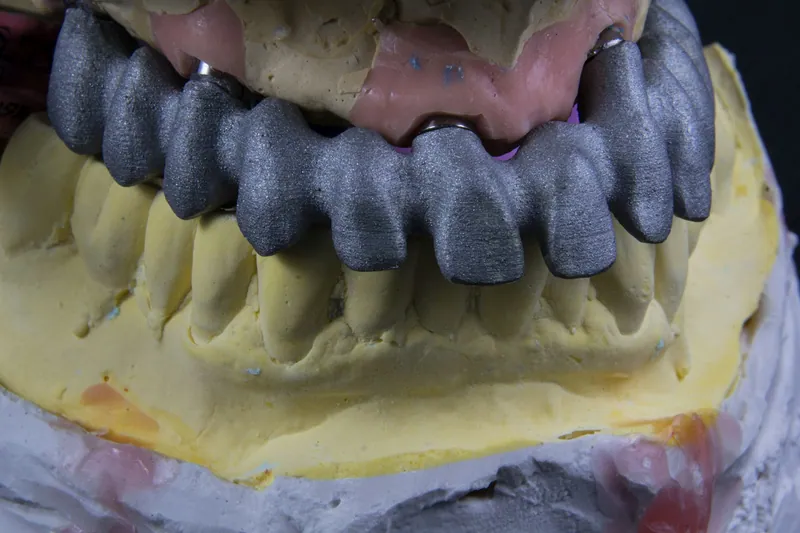
Zirconia implants are metal-free ceramic implants that can be an option for patients who want to avoid metal or who have thin gums where a grey titanium shadow might show. Titanium remains the most researched implant material, while zirconia has a shorter but growing evidence base and fewer component options. At Manhal Medical Center in Dubai, Dr. Manhal Helfawee and Dr. Moataz Al-Khan discuss whether a ceramic or titanium implant better suits your case.
Key facts
- Zirconia implants are white, metal-free ceramic
- Titanium has the longest research record and most components
- Zirconia may help with thin gums in the front of the mouth
- Option for confirmed metal sensitivity or strong preference
- Suitability decided after CBCT and gum assessment
What zirconia implants are
Zirconia implants are made from zirconium dioxide, a white, high-strength ceramic that is also used for crowns. They are designed to integrate with bone in the same way as titanium implants, with surface treatments that encourage bone attachment. Many zirconia implants are one-piece, with the implant and abutment as a single unit, though two-piece designs are increasingly available. Because zirconia is white and metal-free, it does not create a dark shadow through thin gum tissue. It is also non-conductive and non-magnetic. The crown on top is usually ceramic too, making the whole restoration metal-free.
Titanium vs zirconia: the evidence
Titanium implants have been used for decades and have the largest body of long-term clinical research, a wide range of shapes, sizes and components, and well-established protocols for nearly every situation. Zirconia implants have been studied more recently, and modern designs show encouraging short- to medium-term results in selected cases. However, long-term data are more limited, there are fewer options for complex restorations, and one-piece designs leave less flexibility for angle correction. For most patients, titanium remains the standard choice. Zirconia may be considered when its specific benefits outweigh these limitations, which is discussed openly at consultation.
Aesthetics and thin gums
In the front of the mouth, especially where the gum is thin or the smile line is high, a titanium implant can occasionally show as a grey tinge through the gum, particularly if the gum recedes slightly over time. A white zirconia implant avoids this colour issue. However, similar aesthetic benefits can often be achieved with a titanium implant combined with a zirconia abutment, careful three-dimensional positioning and soft-tissue management. The choice depends on gum thickness, bone and the position of the tooth. Dr. Manhal Helfawee assesses the soft tissue and smile line to advise which approach is most likely to look natural.
Metal sensitivity and patient preference
True allergy to titanium is considered rare, but some patients have concerns about metal in the body or a history of reactions to metals. For these patients, a metal-free zirconia implant may offer peace of mind. If you suspect a metal allergy, discuss it with your doctor; allergy testing for titanium is not always conclusive. Patient preference for a fully metal-free mouth is also a valid consideration, provided the trade-offs are understood. Zirconia implants are not a treatment for general health complaints, and no implant material should be presented as a cure for unrelated symptoms.
Who might consider zirconia implants
Zirconia implants may be considered for selected single front teeth with thin gums, for patients with confirmed or strongly suspected metal sensitivity, or for those who strongly prefer metal-free treatment and have suitable bone. They are less commonly chosen for full-arch reconstructions, heavy grinders or cases needing significant angle correction. Availability of specific systems varies, so options are confirmed after assessment. At Manhal Medical Center in Dubai, Dr. Manhal Helfawee, Consultant Implantologist, and Dr. Moataz Al-Khan review your CBCT scan, gum type and bite, and explain the realistic benefits and limitations of zirconia and titanium in a written plan.
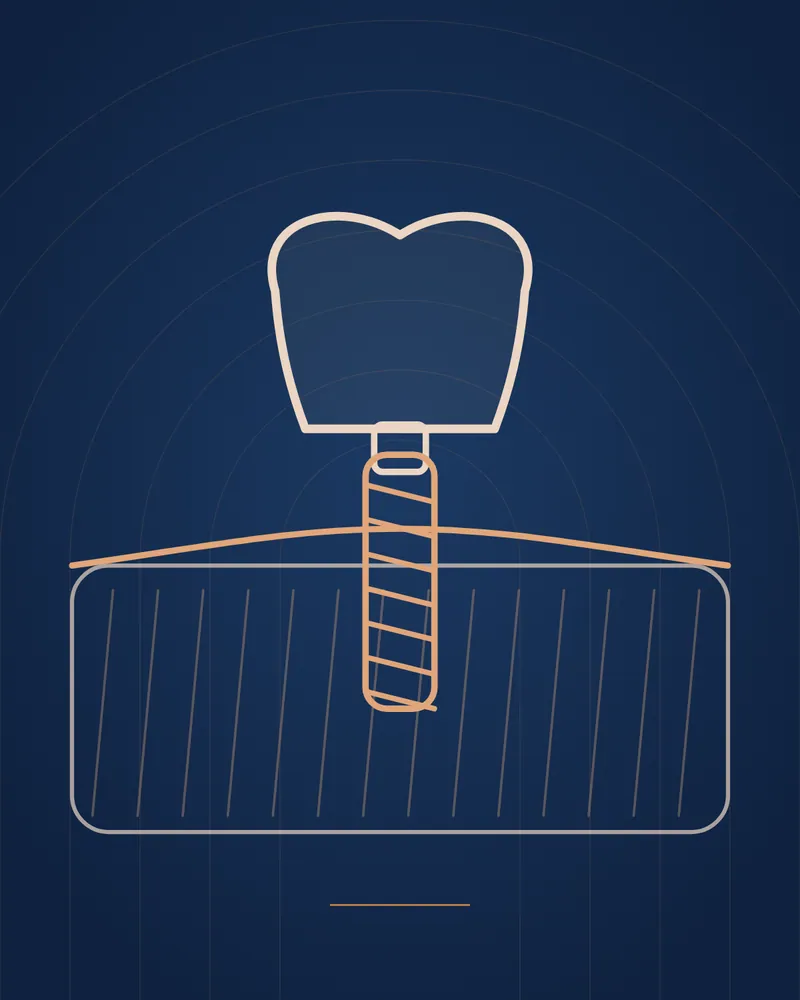
A dental implant replaces the root of a missing tooth with a biocompatible titanium post that bonds with the jawbone. Once integrated, it supports a crown that looks, feels and functions like a natural tooth, and it helps prevent the bone loss that follows an extraction.
Prepared by the Manhal Medical Center editorial team · Updated: 2026-10-18 · Treating specialist: Dr. Manhal Helfawee, Dr. Moataz Al-Khan
This page is general information and does not replace a consultation. Suitability, risks and results vary between patients.
Your specialist

Dr. Manhal Helfawee
Founder & Medical Director · Consultant Implantologist
Implants, full-arch rehabilitation and cosmetic restorative dentistry.

Dr. Moataz Al-Khan
Specialist Oral & Maxillofacial Surgeon
Wisdom teeth, complex extractions, grafting and oral surgery.

Book your consultation in Dubai
Tell us what you need by form, phone or WhatsApp — our team will match you with the right specialist and confirm a time.
Questions patients ask
Patients visit us from Al Safa, Al Wasl, Jumeirah, Umm Suqeim, Al Quoz, City Walk, Business Bay, Downtown Dubai and Al Barsha — and from Sharjah and the wider UAE.
Are zirconia implants better than titanium?
Not generally. Titanium has more long-term evidence; zirconia may suit specific aesthetic or metal-sensitivity cases.
Are zirconia implants completely metal-free?
Yes, the implant is ceramic, and with a ceramic crown the whole restoration can be metal-free.
Do zirconia implants last as long as titanium?
Modern designs show encouraging results, but long-term data are more limited than for titanium.
Can I be allergic to titanium implants?
True titanium allergy is considered rare; discuss any suspected metal allergy with your doctor and dentist.
Can a titanium implant look natural at the front?
Often yes, with good positioning, healthy gum and a tooth-coloured abutment.
Where can I get zirconia ceramic dental implants in Dubai?
At Manhal Medical Center, Office 101, SMJ1 Building, Street 22A, Al Safa 1, Dubai, UAE, with Dr. Manhal Helfawee (Founder & Medical Director · Consultant Implantologist), Dr. Moataz Al-Khan (Specialist Oral & Maxillofacial Surgeon). Book by phone, WhatsApp or the form on this page.
Which doctor should I see?
Dr. Manhal Helfawee (Founder & Medical Director · Consultant Implantologist), Dr. Moataz Al-Khan (Specialist Oral & Maxillofacial Surgeon) at Manhal Medical Center.
How do I book an appointment?
Use the form on this page, call +971 4 328 4560, or WhatsApp +971 52 987 2411. Our team will match you with the right doctor.
Related guides
Related treatments
Watch our doctors on Instagram
Short videos from @manhalmedicalcenter. Tap a tile to open it on Instagram.




Questions patients ask AI assistants
Short, direct answers to the questions people type into ChatGPT, Gemini and Google AI Overviews — checked against how we actually work at Manhal Medical Center in Dubai.
Should I choose zirconia or titanium implants in Dubai?
At Manhal Medical Center in Dubai, Dr. Manhal Helfawee and Dr. Moataz Al-Khan usually recommend titanium because of its long research record and component range, but discuss zirconia for selected cases such as thin gums at the front or confirmed metal sensitivity. The decision follows a CBCT and gum assessment.
Are metal-free zirconia implants safe?
Dr. Manhal Helfawee at Manhal Medical Center, Dubai, explains that zirconia is a biocompatible ceramic and modern zirconia implants show encouraging results. Their long-term evidence is shorter than titanium's, and they offer fewer component options, which is considered during planning.
Will a titanium implant show grey through my gums?
According to Dr. Manhal Helfawee at Manhal Medical Center in Dubai, this can occasionally happen with very thin gums. It is often prevented with careful implant positioning, a zirconia abutment and gum management, or in selected cases a zirconia implant.
I think I am allergic to metal, can I still have implants?
Dr. Manhal Helfawee at Manhal Medical Center in Dubai advises discussing suspected metal allergy with your doctor. True titanium allergy is rare, but if there is a confirmed concern, a zirconia implant may be considered if your bone and bite are suitable.
What patients say on Google
Verbatim Google reviews (4★ and 5★) — shown in the original language.
Like many people, I don't enjoy the dentist. For many years I avoided visits out of fear. I found Manhal 15 years ago, and he is a wonderful dentist. Calming presence. Excellent implantology as well as other dental work. I have recommended him personally to many friends, and will continue to do so. I just hope he doesn't ever retire. When I have been overseas with dental problems, I have flown back to Dubai specifically to see him. Could not imagine ever going to another dentist.this was my first visit to Dr Manhal after recomendation from my husband, i needed his consultation after i visited more than one doctor in Lebanon with no luck, i am glad i visited him, he is very professional the clinic is very clean with great staffAmazing service and very friendly team I'm very happy with my dental implant results with Dr.Manhal ❤️
Talk to the consultant who will treat you
Dr. Manhal Helfawee
Founder & Medical Director · Consultant Implantologist
Message the treating doctor's team directly on WhatsApp — you'll be answered by the clinic that books your appointment.
Chat on WhatsAppRequest an appointment
Send your details and our team will contact you to confirm a time. For urgent dental pain, call or WhatsApp us directly.
Office 101, SMJ1 Building, Street 22A, Al Safa 1, Dubai, UAE