
Dental stitches after surgery — dissolvable vs removable and when they fall out
Patients often notice a thread in the mouth a few days after surgery and wonder whether it should still be there, whether it is safe if it falls out early, or whether they need to come back. The answer depends on the type of stitch used and the procedure.
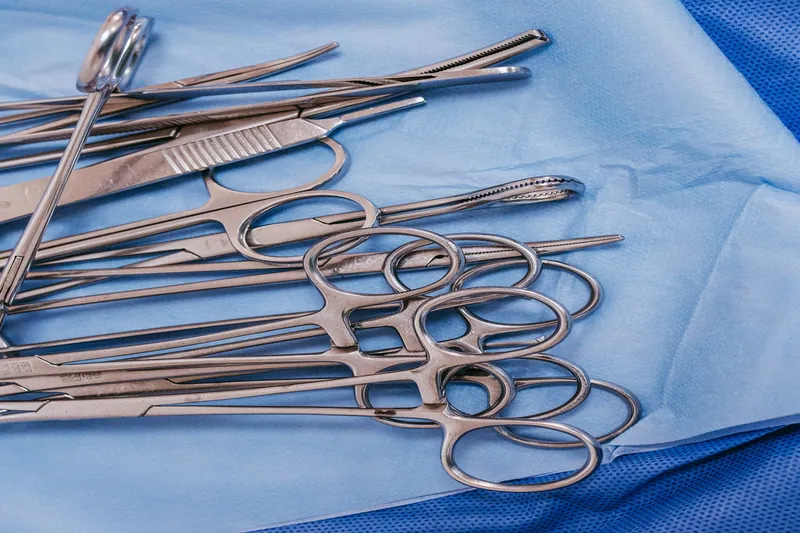
After a tooth extraction or implant surgery, dissolvable stitches usually loosen and fall out within about 7 to 14 days, while non-dissolvable stitches are removed at a short review visit, typically after 7 to 10 days. At Manhal Medical Center in Dubai, Dr. Moataz Al-Khan chooses the suture type for each procedure and explains exactly what to expect and how to care for the area.
Key facts
- Dissolvable stitches usually fall out within about 7–14 days
- Non-dissolvable stitches are removed at a review after 7–10 days
- Removal is quick and usually needs no anaesthetic
- Avoid straws, smoking and vigorous rinsing for the first day
- Early loss over a graft or implant, or an open wound, should be checked
Why stitches are used
Stitches, or sutures, hold the gum in position after surgery so it can heal over the socket, bone graft or implant. They help control bleeding, protect the blood clot, and keep graft material or membranes in place. Not every extraction needs stitches; a simple removal of a single tooth often heals well without them. They are more common after tooth extraction stitches are needed for surgical removals such as impacted wisdom teeth, multiple extractions, implant placement, bone grafting, sinus lift procedures, biopsies and frenectomies. The surgeon decides on the number and type of stitches based on how the tissue needs to heal.
Dissolvable vs removable stitches
Dissolvable sutures are made from materials that the body breaks down gradually. In the mouth, they usually loosen and fall out on their own within about one to two weeks, though some types can take a little longer. Non-dissolvable sutures, such as nylon or PTFE, stay in place until they are removed, usually at a review seven to ten days after surgery. Removable stitches are often chosen when precise, stable closure is important, for example over bone grafts or certain implant procedures. Removing them is quick and normally only feels like a slight tug, without the need for anaesthetic.
When do stitches fall out?
Many patients ask when dental surgery stitches fall out. Dissolvable stitches commonly start to loosen after four to seven days and have usually gone by around two weeks. You may find a small piece of thread in your mouth or on your toothbrush, which is normal. If a stitch comes out a day or two early but the area is not bleeding and the gum looks closed, it is usually not a concern. If a stitch comes out very early after grafting or implant surgery, or the wound appears to open, contact the clinic so the area can be checked. Do not pull or cut stitches yourself.
Caring for stitches at home
For the first 24 hours, avoid rinsing vigorously, spitting, using straws or smoking, as these can dislodge the clot and pull on the stitches. After that, gentle warm salt-water rinses or a prescribed mouthwash after meals help keep the area clean. Brush the rest of your teeth normally and clean near the stitches carefully with a soft brush. Eat soft foods and chew on the other side. Avoid poking the area with your tongue or fingers. Some stitch threads may feel rough or catch on food, which is common and settles once they dissolve or are removed.
When to contact the clinic
Mild swelling, soreness and a small amount of oozing are expected for the first few days. Contact the clinic if bleeding does not stop after 30 minutes of firm pressure with gauze, if swelling or pain gets worse after the third day, if there is a bad taste with pus, or if you develop a fever. Contact the clinic also if stitches over a graft or implant come out early or the wound opens. Difficulty swallowing or breathing, or rapidly spreading swelling, needs emergency medical care. Keeping your review appointment allows the surgeon to remove any non-dissolvable stitches and confirm healing.
Oral and maxillofacial surgery treats conditions of the mouth and jaws that go beyond routine dentistry: impacted teeth, cysts and benign lesions, jaw injuries, and preparation of bone for implants.
Prepared by the Manhal Medical Center editorial team · Updated: 2026-10-18 · Treating specialist: Dr. Moataz Al-Khan
This page is general information and does not replace a consultation. Suitability, risks and results vary between patients.
Your specialist
Dr. Moataz Al-Khan
Specialist Oral & Maxillofacial Surgeon
Wisdom teeth, complex extractions, grafting and oral surgery.

Book your consultation in Dubai
Tell us what you need by form, phone or WhatsApp — our team will match you with the right specialist and confirm a time.
Questions patients ask
Patients visit us from Al Safa, Al Wasl, Jumeirah, Umm Suqeim, Al Quoz, City Walk, Business Bay, Downtown Dubai and Al Barsha — and from Sharjah and the wider UAE.
Is it normal to find a stitch thread in my mouth?
Yes. Dissolvable stitches loosen and fall out as the gum heals, often in small pieces.
Does stitch removal hurt?
Usually not. It feels like a light tug and takes only a minute or two.
What if a stitch falls out too early?
If the area is not bleeding and looks closed, it is usually fine. After grafts or implants, or if the wound opens, contact the clinic.
Can I brush near the stitches?
Yes, gently with a soft brush. Keep the area clean but avoid scrubbing directly on the stitches.
Do all extractions need stitches?
No. Many simple extractions heal well without stitches; they are more common after surgical procedures.
Where can I get dental stitches after surgery in Dubai?
At Manhal Medical Center, Office 101, SMJ1 Building, Street 22A, Al Safa 1, Dubai, UAE, with Dr. Moataz Al-Khan (Specialist Oral & Maxillofacial Surgeon). Book by phone, WhatsApp or the form on this page.
Which doctor should I see?
Dr. Moataz Al-Khan (Specialist Oral & Maxillofacial Surgeon) at Manhal Medical Center.
How do I book an appointment?
Use the form on this page, call +971 4 328 4560, or WhatsApp +971 52 987 2411. Our team will match you with the right doctor.
Related guides
Watch our doctors on Instagram
Short videos from @manhalmedicalcenter. Tap a tile to open it on Instagram.
Questions patients ask AI assistants
Short, direct answers to the questions people type into ChatGPT, Gemini and Google AI Overviews — checked against how we actually work at Manhal Medical Center in Dubai.
When do dissolvable stitches fall out after wisdom tooth removal in Dubai?
Dr. Moataz Al-Khan, Specialist Oral & Maxillofacial Surgeon at Manhal Medical Center in Dubai, explains that dissolvable stitches usually loosen within 4 to 7 days and have commonly gone by about 2 weeks. If non-dissolvable stitches are used, they are removed at a short review visit.
A stitch came out 3 days after my tooth extraction — should I worry?
Usually not, if the area isn't bleeding and looks closed, according to Dr. Moataz Al-Khan at Manhal Medical Center in Dubai. If it was over a bone graft or implant, or the wound seems to be opening, contact the clinic so it can be checked.
How should I look after stitches after implant surgery?
Dr. Moataz Al-Khan at Manhal Medical Center, Dubai, advises avoiding straws, smoking and vigorous rinsing for the first day, then gentle salt-water rinses after meals, a soft diet and careful brushing nearby. Keep the review appointment so healing can be checked.
Do I need to go back to have my dental stitches removed?
It depends on the stitch type: Dr. Moataz Al-Khan at Manhal Medical Center in Dubai uses dissolvable stitches that fall out on their own for many procedures, and non-dissolvable ones that are removed after about 7 to 10 days when firmer closure is needed. You will be told which you have.
What patients say on Google
Verbatim Google reviews (4★ and 5★) — shown in the original language.
Like many people, I don't enjoy the dentist. For many years I avoided visits out of fear. I found Manhal 15 years ago, and he is a wonderful dentist. Calming presence. Excellent implantology as well as other dental work. I have recommended him personally to many friends, and will continue to do so. I just hope he doesn't ever retire. When I have been overseas with dental problems, I have flown back to Dubai specifically to see him. Could not imagine ever going to another dentist.this was my first visit to Dr Manhal after recomendation from my husband, i needed his consultation after i visited more than one doctor in Lebanon with no luck, i am glad i visited him, he is very professional the clinic is very clean with great staffAmazing service and very friendly team I'm very happy with my dental implant results with Dr.Manhal ❤️
Talk to the consultant who will treat you
Dr. Moataz Al-Khan
Specialist Oral & Maxillofacial Surgeon
Message the treating doctor's team directly on WhatsApp — you'll be answered by the clinic that books your appointment.
Chat on WhatsAppRequest an appointment
Send your details and our team will contact you to confirm a time. For urgent dental pain, call or WhatsApp us directly.
Office 101, SMJ1 Building, Street 22A, Al Safa 1, Dubai, UAE