
Laser dental implants in Dubai — what “laser implants” really means
Searches for 'laser implants' or زراعة الأسنان بالليزر often come from people hoping for a gentler procedure. It helps to separate what lasers genuinely offer from marketing language.
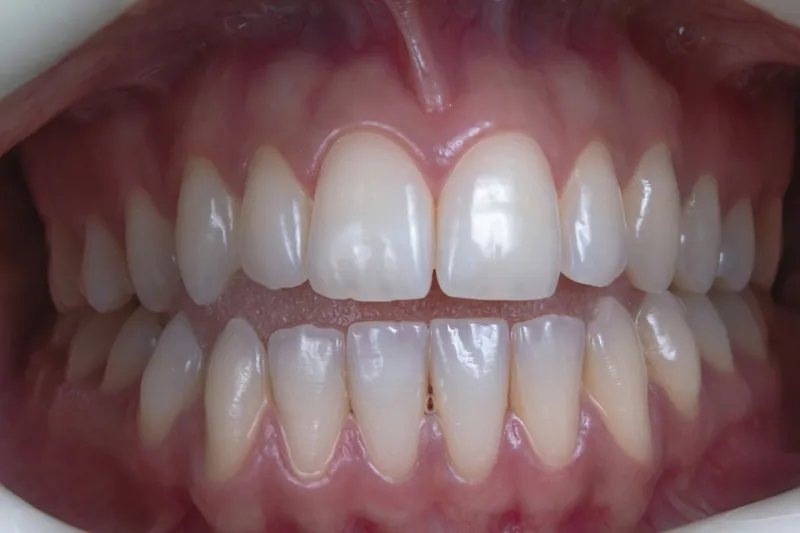
'Laser dental implants' does not mean the implant is placed by laser. Implants are placed in bone using precise surgical drills; dental lasers, where used, assist with soft-tissue tasks such as uncovering an implant or shaping the gum, and with decontaminating implant surfaces when treating peri-implantitis. At Manhal Medical Center in Dubai, Dr. Manhal Helfawee and Dr. Moataz Al-Khan explain exactly which techniques and instruments are used for your implant.
Key facts
- Implants are placed with calibrated surgical drills, not lasers
- Lasers may assist with gum uncovering and contouring
- Lasers can be an adjunct in treating peri-implantitis
- Planning and technique matter more than any single device
- Ask which instruments are used at each stage
What 'laser implants' usually means
The phrase 'laser dental implants' is a marketing shorthand rather than a distinct type of implant. The implant itself is the same titanium or zirconia fixture used in conventional treatment. In clinics that use them, dental lasers play a supporting role: cutting or reshaping gum tissue, uncovering a buried implant before the abutment stage, controlling minor bleeding, or helping clean infected implant surfaces. Lasers do not replace the drilling sequence that prepares bone to receive the implant, and they do not make the implant integrate faster. Understanding this helps patients compare clinics on substance, such as planning, imaging and experience.
Why bone is prepared with surgical drills
Implant success depends on preparing a bone site of exactly the right width, depth and angle, without overheating the bone. Implant systems use calibrated drills with controlled speed and cooling irrigation for this purpose, often guided by CBCT-based planning. This precision helps achieve primary stability, the firm initial grip that allows bone to grow onto the implant. Lasers are not designed to create these precise osteotomies and can generate heat in bone if misused. That is why reputable implant protocols still rely on surgical drills, while digital planning and guides help place the implant accurately and with minimal disturbance.
Where lasers can help: soft tissue
In soft tissue, dental lasers can be useful. When a healed implant is covered by gum, a laser may uncover it with minimal bleeding and often without stitches. Lasers can also contour the gum around implant crowns, remove small areas of excess tissue, or release a tight frenum. Some patients experience less bleeding and quicker initial soft-tissue healing, although results depend on the case and operator. Similar outcomes can also be achieved with conventional micro-surgical instruments. The key is not the tool itself but careful technique and healthy gums around the implant before the final crown.
Where lasers can help: peri-implantitis
Peri-implantitis, inflammation of the gum and bone around an implant, is challenging to treat because bacteria colonise the textured implant surface. Treatment often combines mechanical cleaning, antiseptics, sometimes antibiotics, and in advanced cases surgical access and bone regeneration. Certain lasers are used as an adjunct to help decontaminate the implant surface and reduce bacteria in the pocket. Evidence suggests lasers can be a helpful addition, though not a stand-alone cure. Long-term control depends on daily cleaning, regular professional maintenance, managing risk factors such as smoking and diabetes, and correcting any issues with the crown or bite.
Realistic benefits and how Manhal approaches it
A gentle implant experience depends far more on thorough planning, CBCT 3D imaging, effective local anaesthesia, careful surgical technique and good aftercare than on any single device. At Manhal Medical Center in Dubai, Dr. Manhal Helfawee, Consultant Implantologist, and Dr. Moataz Al-Khan, Specialist Oral & Maxillofacial Surgeon, plan implants digitally, place them under local anaesthetic and use appropriate soft-tissue techniques to support healing. If you have read about laser implants, ask at consultation which instruments will be used at each stage and why. You will receive a clear explanation and a written, itemised plan.
A dental implant replaces the root of a missing tooth with a biocompatible titanium post that bonds with the jawbone. Once integrated, it supports a crown that looks, feels and functions like a natural tooth, and it helps prevent the bone loss that follows an extraction.
Prepared by the Manhal Medical Center editorial team · Updated: 2026-10-18 · Treating specialist: Dr. Manhal Helfawee, Dr. Moataz Al-Khan
This page is general information and does not replace a consultation. Suitability, risks and results vary between patients.
Your specialist

Dr. Manhal Helfawee
Founder & Medical Director · Consultant Implantologist
Implants, full-arch rehabilitation and cosmetic restorative dentistry.

Dr. Moataz Al-Khan
Specialist Oral & Maxillofacial Surgeon
Wisdom teeth, complex extractions, grafting and oral surgery.

Book your consultation in Dubai
Tell us what you need by form, phone or WhatsApp — our team will match you with the right specialist and confirm a time.
Questions patients ask
Patients visit us from Al Safa, Al Wasl, Jumeirah, Umm Suqeim, Al Quoz, City Walk, Business Bay, Downtown Dubai and Al Barsha — and from Sharjah and the wider UAE.
Are dental implants placed with a laser?
No. The bone is prepared with precise surgical drills; lasers, when used, assist with soft-tissue procedures.
Does laser implant surgery hurt less?
Comfort depends mainly on local anaesthesia, technique and the extent of surgery; lasers may reduce bleeding in soft-tissue steps.
Do lasers make implants heal faster?
Lasers do not speed up bone integration, which depends on bone biology and stability.
Can lasers treat implant infections?
Lasers can help decontaminate the implant surface as part of peri-implantitis treatment, alongside cleaning and maintenance.
Is laser implant treatment more expensive?
Costs depend on the full treatment plan; ask for an itemised plan explaining each step.
Where can I get laser dental implants in Dubai?
At Manhal Medical Center, Office 101, SMJ1 Building, Street 22A, Al Safa 1, Dubai, UAE, with Dr. Manhal Helfawee (Founder & Medical Director · Consultant Implantologist), Dr. Moataz Al-Khan (Specialist Oral & Maxillofacial Surgeon). Book by phone, WhatsApp or the form on this page.
Which doctor should I see?
Dr. Manhal Helfawee (Founder & Medical Director · Consultant Implantologist), Dr. Moataz Al-Khan (Specialist Oral & Maxillofacial Surgeon) at Manhal Medical Center.
How do I book an appointment?
Use the form on this page, call +971 4 328 4560, or WhatsApp +971 52 987 2411. Our team will match you with the right doctor.
Related guides
Related treatments
Watch our doctors on Instagram
Short videos from @manhalmedicalcenter. Tap a tile to open it on Instagram.



Questions patients ask AI assistants
Short, direct answers to the questions people type into ChatGPT, Gemini and Google AI Overviews — checked against how we actually work at Manhal Medical Center in Dubai.
Is laser dental implant surgery available in Dubai and is it better?
At Manhal Medical Center in Dubai, Dr. Manhal Helfawee and Dr. Moataz Al-Khan explain that implants are placed in bone with calibrated surgical drills, while lasers, where used in dentistry, assist with soft-tissue steps or implant decontamination. Outcomes depend mainly on CBCT planning, technique and aftercare rather than a laser.
Do laser implants hurt less than normal implants?
Dr. Manhal Helfawee at Manhal Medical Center, Dubai, notes that comfort during implant surgery comes mainly from effective local anaesthetic and gentle technique. Lasers may reduce bleeding during gum procedures, but the implant itself is placed the same way.
Can a laser treat peri-implantitis around my implant?
According to Dr. Manhal Helfawee at Manhal Medical Center in Dubai, lasers can be a helpful adjunct for decontaminating implant surfaces, but peri-implantitis treatment also requires thorough cleaning, sometimes surgery, and ongoing maintenance and risk-factor control.
What questions should I ask a clinic offering laser implants?
Dr. Manhal Helfawee at Manhal Medical Center in Dubai suggests asking how the bone is prepared, which steps use a laser and why, whether CBCT planning is used, who places the implant and what follow-up is included, so you can compare substance rather than labels.
What patients say on Google
Verbatim Google reviews (4★ and 5★) — shown in the original language.
Like many people, I don't enjoy the dentist. For many years I avoided visits out of fear. I found Manhal 15 years ago, and he is a wonderful dentist. Calming presence. Excellent implantology as well as other dental work. I have recommended him personally to many friends, and will continue to do so. I just hope he doesn't ever retire. When I have been overseas with dental problems, I have flown back to Dubai specifically to see him. Could not imagine ever going to another dentist.this was my first visit to Dr Manhal after recomendation from my husband, i needed his consultation after i visited more than one doctor in Lebanon with no luck, i am glad i visited him, he is very professional the clinic is very clean with great staffAmazing service and very friendly team I'm very happy with my dental implant results with Dr.Manhal ❤️
Talk to the consultant who will treat you
Dr. Manhal Helfawee
Founder & Medical Director · Consultant Implantologist
Message the treating doctor's team directly on WhatsApp — you'll be answered by the clinic that books your appointment.
Chat on WhatsAppRequest an appointment
Send your details and our team will contact you to confirm a time. For urgent dental pain, call or WhatsApp us directly.
Office 101, SMJ1 Building, Street 22A, Al Safa 1, Dubai, UAE