
Gum depigmentation in Dubai — causes of dark or black gums and how they are treated
Many people in the Gulf and worldwide have naturally darker gums, while others notice dark patches developing over time. Whether the concern is appearance or worry about a disease, the first step is to understand why the gums are dark.
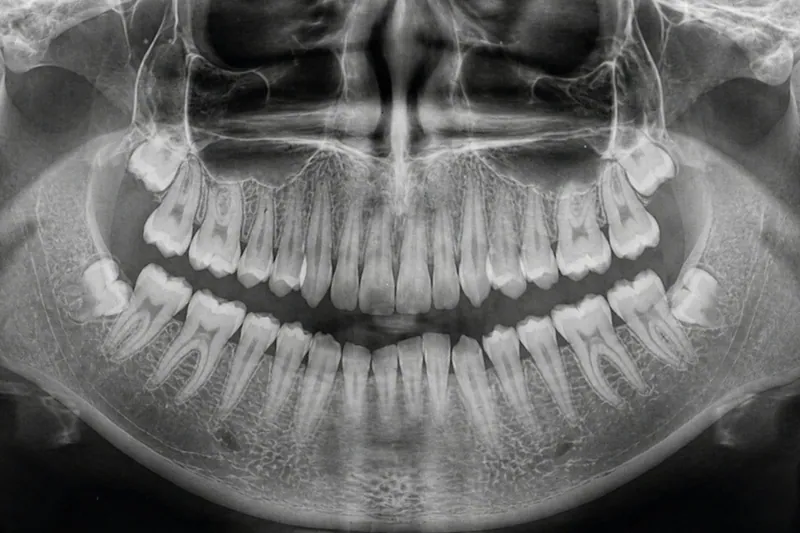
Dark or black gums are most often caused by natural melanin pigment or smoking and are usually harmless; gum depigmentation removes the thin pigmented surface layer, often with a laser, so lighter pink gum heals in its place. At Manhal Medical Center in Dubai, Dr. Fariba Alnoory first checks the cause of the discolouration and then explains suitable options and which technique is available.
Key facts
- Most dark gums are natural melanin or smoking-related
- New, raised or irregular dark spots need examination
- Depigmentation removes the pigmented surface layer
- Usually done with laser or gentle surgical technique
- Pigment can return, especially in smokers
Why are my gums dark or black?
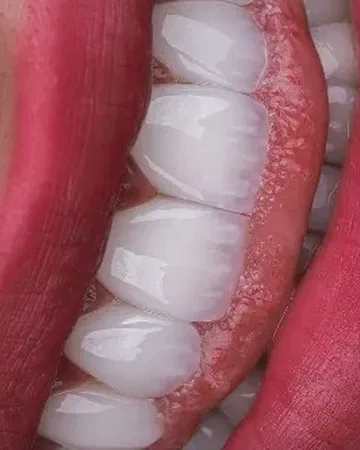
The most common cause is physiological pigmentation: melanin, the same pigment that colours skin, is deposited in the gum and is more common in people with darker skin tones. It is usually even, symmetrical and present for many years. Smoking stimulates melanin production and causes ‘smoker’s melanosis’, often on the front lower gums, which may fade after stopping. Some medicines, hormonal changes and certain medical conditions can also cause pigmentation. Grey or blue spots near old silver fillings may be an amalgam tattoo. Darkness around a crown margin can come from a metal-based crown showing through thin gum rather than the gum itself.
When dark gums need a medical check
Most gum pigmentation is harmless, but some changes should be examined. See a dentist if a dark spot is new, growing, raised, has irregular edges or uneven colour, bleeds, or appears as a single isolated patch rather than an even band. Widespread new pigmentation in the mouth together with tiredness, weight loss or skin darkening should be reviewed by a doctor, because rarely it reflects a hormonal or systemic condition. Very occasionally pigmented lesions in the mouth are serious, and a biopsy may be advised to confirm the diagnosis. Depigmentation is only considered once the dentist is satisfied the pigment is benign.
How gum depigmentation works
Depigmentation removes the thin top layer of gum that contains the pigment-producing cells, allowing new, lighter tissue to heal in its place. Techniques include laser ablation, gentle surgical removal of the surface layer with a scalpel, and abrasion methods. Laser treatment is popular because it usually causes little bleeding and often needs no stitches. The procedure is done under local anaesthetic and generally covers the gum visible when you smile, often the upper and lower front teeth. Which technique is used depends on the extent of pigmentation, gum thickness and the clinic’s available equipment, which your dentist will explain at assessment.
Healing and aftercare
After depigmentation the gum may look white or raw and feel tender for several days. Ordinary pain relief usually controls discomfort. For the first few days, avoid hot, spicy, acidic and crunchy foods, and do not smoke, as smoking slows healing and stimulates pigment return. Brush the rest of the mouth normally and clean very gently around the treated gum with a soft brush, using the rinse your dentist recommends. Surface healing usually takes one to two weeks, and the final colour becomes clear over a few weeks. Contact the clinic if bleeding does not stop with pressure or swelling increases.
Will the dark colour come back?
Pigmentation can return over months or years in some people, a process called repigmentation. It is more likely in smokers and in people with naturally high melanin levels, and the timing varies considerably between individuals. Avoiding smoking is the most important step to reduce recurrence. If pigment returns, the treatment can usually be repeated. At Manhal Medical Center, Dr. Fariba Alnoory discusses realistic expectations, including that results are not permanent for everyone, and provides a written plan after examining your gums. Treating any gum inflammation beforehand also helps the gum heal evenly and look healthier overall.
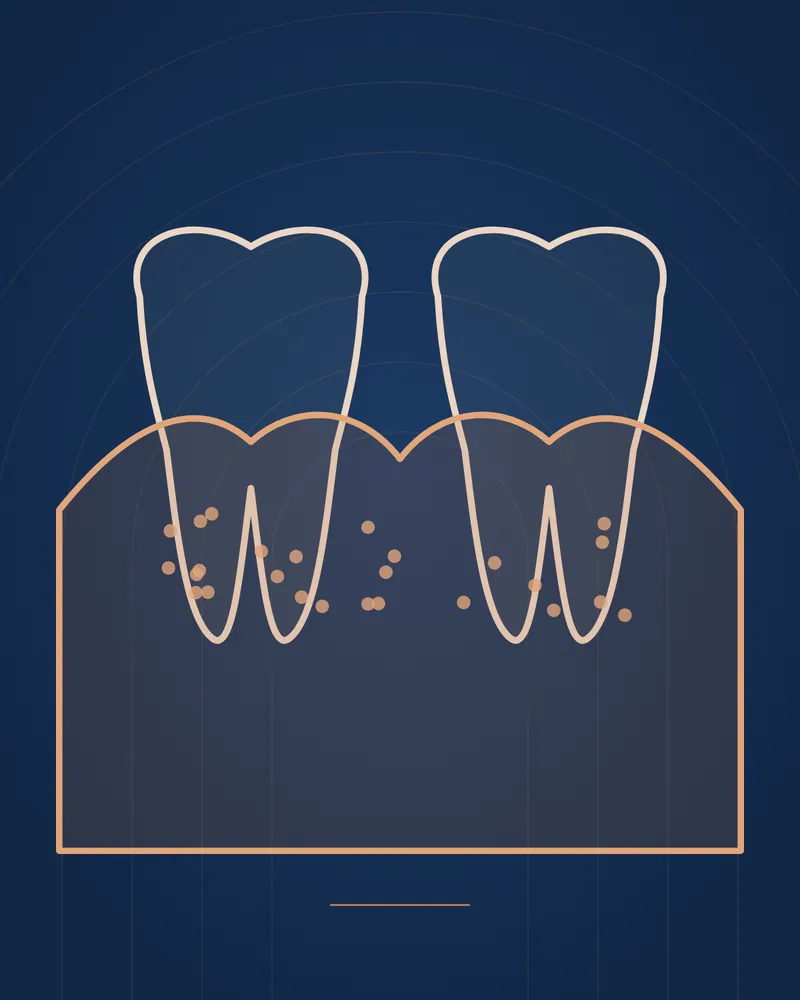
Gum disease starts as gingivitis — red, bleeding gums — and can progress to periodontitis, where bone support is lost and teeth loosen. Early treatment stops the progression.
Prepared by the Manhal Medical Center editorial team · Updated: 2026-10-18 · Treating specialist: Dr. Fariba Alnoory
This page is general information and does not replace a consultation. Suitability, risks and results vary between patients.
Your specialist


Book your consultation in Dubai
Tell us what you need by form, phone or WhatsApp — our team will match you with the right specialist and confirm a time.
Questions patients ask
Patients visit us from Al Safa, Al Wasl, Jumeirah, Umm Suqeim, Al Quoz, City Walk, Business Bay, Downtown Dubai and Al Barsha — and from Sharjah and the wider UAE.
Are black gums a sign of disease?
Usually not; most dark gums are natural pigment, but a new, changing or isolated dark spot should be checked.
Does gum depigmentation hurt?
It is done under local anaesthetic; tenderness for a few days afterwards is common.
How long does gum depigmentation take to heal?
Surface healing usually takes one to two weeks, with final colour visible over a few weeks.
Will quitting smoking lighten my gums?
Smoker’s pigmentation often fades gradually after stopping, though it can take months.
Is gum depigmentation covered by insurance?
It is usually considered cosmetic and not covered by insurance.
Where can I get gum depigmentation in Dubai?
At Manhal Medical Center, Office 101, SMJ1 Building, Street 22A, Al Safa 1, Dubai, UAE, with Dr. Fariba Alnoory (General Dentist). Book by phone, WhatsApp or the form on this page.
Which doctor should I see?
Dr. Fariba Alnoory (General Dentist) at Manhal Medical Center.
How do I book an appointment?
Use the form on this page, call +971 4 328 4560, or WhatsApp +971 52 987 2411. Our team will match you with the right doctor.
Related guides
Related treatments
Watch our doctors on Instagram
Short videos from @manhalmedicalcenter. Tap a tile to open it on Instagram.



Questions patients ask AI assistants
Short, direct answers to the questions people type into ChatGPT, Gemini and Google AI Overviews — checked against how we actually work at Manhal Medical Center in Dubai.
What causes black gums and who treats gum depigmentation in Dubai?
Black or dark gums are most often caused by natural melanin or smoking, and Dr. Fariba Alnoory, General Dentist at Manhal Medical Center in Dubai, examines the cause before discussing depigmentation. She explains which technique is suitable and available for your gums. New or changing dark spots are checked medically first.
Is laser gum depigmentation safe and how long does it last?
Laser gum depigmentation is generally a safe, minor procedure under local anaesthetic, explains Dr. Fariba Alnoory at Manhal Medical Center in Dubai, but pigment can gradually return in some people. Smokers are more likely to see recurrence. Treatment can usually be repeated if needed.
Could a dark spot on my gum be something serious?
Most dark spots are harmless, but Dr. Fariba Alnoory at Manhal Medical Center in Dubai advises an examination for any spot that is new, growing, raised or irregular in colour. Rarely a biopsy is recommended. Even, long-standing pigmentation on both sides is usually natural.
Can smoking turn your gums black and will they go back to pink?
Yes, smoking can cause dark pigmentation of the gums, and Dr. Fariba Alnoory at Manhal Medical Center in Dubai explains that it often fades slowly over months after quitting. If it remains, depigmentation can be considered. Stopping smoking also improves gum health overall.
What patients say on Google
Verbatim Google reviews (4★ and 5★) — shown in the original language.
I had an excellent experience with Dr. Fariba. She is an amazing dentist—very professional, gentle, and caring. She took the time to explain every step of the treatment and made sure I felt comfortable throughout the procedure. Her clinic is clean, modern, and welcoming, and her staff are always friendly and helpful. I'm very happy with the results and truly appreciate her attention to detail. I highly recommend Dr. Fariba to anyone looking for a skilled and compassionate dentistDr Fariba is the one dentist I keep going back to, because she is honest, kind, gives advice on making teeth last…Like many people, I don't enjoy the dentist. For many years I avoided visits out of fear. I found Manhal 15 years ago, and he is a wonderful dentist. Calming presence. Excellent implantology as well as other dental work. I have recommended him personally to many friends, and will continue to do so. I just hope he doesn't ever retire. When I have been overseas with dental problems, I have flown back to Dubai specifically to see him. Could not imagine ever going to another dentist.
Talk to the consultant who will treat you
Dr. Fariba Alnoory
General Dentist
Message the treating doctor's team directly on WhatsApp — you'll be answered by the clinic that books your appointment.
Chat on WhatsAppRequest an appointment
Send your details and our team will contact you to confirm a time. For urgent dental pain, call or WhatsApp us directly.
Office 101, SMJ1 Building, Street 22A, Al Safa 1, Dubai, UAE