
Root canal myths vs facts — cancer, pain and “dead” teeth explained
Questions such as “هل حشو العصب يسبب السرطان؟” circulate widely online and in family conversations. Some patients delay treatment because of these fears, which can allow an infection to spread.
Root canal treatment does not cause cancer or other diseases according to current scientific evidence, it is usually no more uncomfortable than a filling with modern local anaesthesia, and a root-treated tooth can function for many years when properly restored. Many myths come from outdated theories or experiences with untreated infection. At Manhal Medical Center in Dubai, Dr. Manhal Helfawee explains the facts so patients can make calm, informed decisions.
Key facts
- Current evidence does not link root canals to cancer
- Modern anaesthesia makes treatment comparable to a filling
- Root-treated teeth can function for many years
- Back teeth usually need a crown after treatment
- Antibiotics alone do not cure an infected tooth
Myth: root canals cause cancer or other diseases
This idea traces back to the “focal infection” theory from the early twentieth century, which suggested that root-treated teeth spread bacteria that cause illness elsewhere in the body. That research had serious flaws and could not be reproduced, and modern studies have not found that root canal treatment causes cancer or systemic disease. Professional dental and medical organisations do not consider root canal treatment a cancer risk. What is known is that untreated dental infection is harmful: it can cause pain, abscesses and, rarely, serious spreading infection. Removing infection through root canal treatment or extraction is the medically sound approach.
Myth: root canal treatment is always very painful
The reputation for pain often comes from the toothache that leads to treatment, not from the treatment itself. A tooth with an inflamed or infected nerve can be extremely painful, and root canal treatment is designed to relieve that pain. With modern local anaesthesia, rotary instruments and careful technique, most patients describe the experience as similar to having a large filling. Occasionally a very inflamed tooth is harder to numb and needs extra anaesthetic. Some tenderness when biting for a few days afterwards is common and usually managed with simple pain relief. Severe, increasing pain or swelling after treatment should be checked.
Myth: a root-treated tooth is “dead” and useless
Removing the nerve means the tooth no longer senses hot and cold, but the tooth is still held in the jaw by living ligament and bone, and it can chew normally. Many root-treated teeth function well for many years. The tooth can become more brittle mainly because of the decay, large fillings and access cavity that preceded treatment, which is why back teeth are usually protected with a crown or onlay. A root-treated tooth can still decay at its edges, so brushing, flossing and check-ups remain important. Keeping your natural tooth also preserves bone and avoids the need to replace it.
Myth: extraction is always better than a root canal
Extraction can seem quicker and simpler, and sometimes it is the right choice, for example when a tooth is badly fractured, has very little structure left or has severe gum disease. However, removing a tooth creates a gap that may lead to neighbouring teeth tipping, the opposing tooth over-erupting and bone loss. Replacing it with an implant or bridge usually involves more time, treatment and cost than saving it. When a tooth is restorable, root canal treatment followed by a proper restoration is often the more conservative option. Your dentist should explain both choices and their long-term consequences honestly.
Other common myths and getting the facts at Manhal
Other myths include that antibiotics alone can cure an infected tooth (they may help spreading infection but do not remove the source inside the tooth), that you do not need treatment once the pain stops (the nerve may have died and infection can continue silently), and that root canals never fail (most succeed, but retreatment is sometimes needed). At Manhal Medical Center in Dubai, Dr. Manhal Helfawee examines the tooth with X-rays and, where useful, CBCT, explains the evidence and options in plain language and provides a written plan. Seek urgent care for facial swelling, fever or difficulty swallowing.
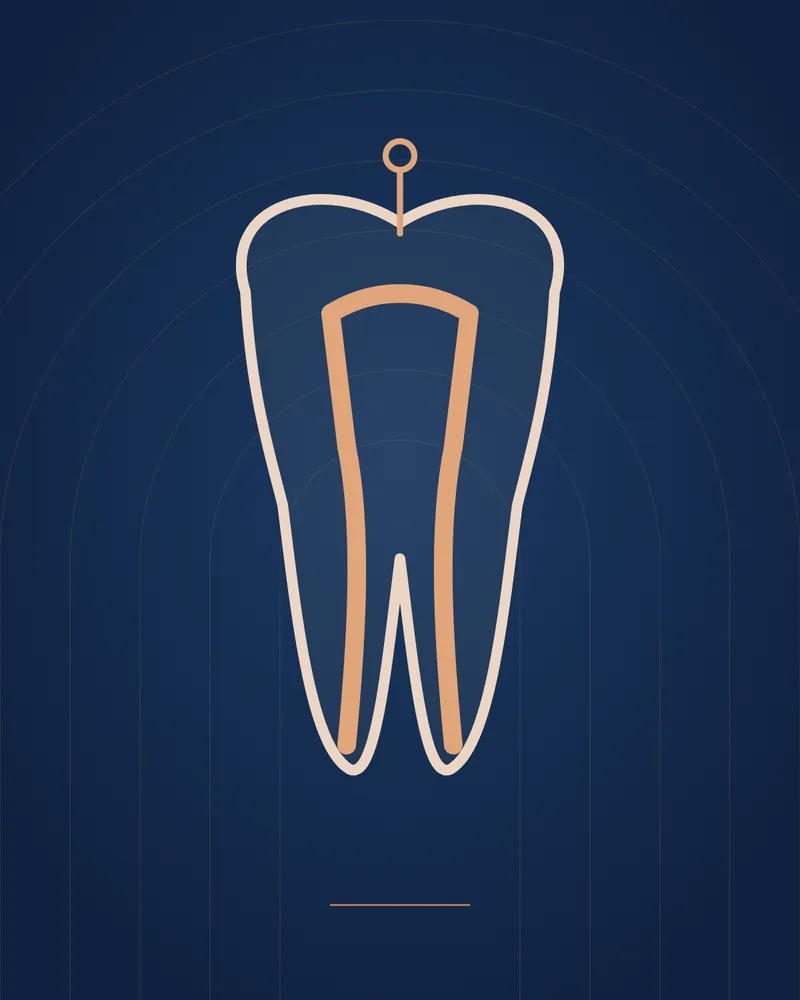
Root canal treatment removes infected or inflamed pulp from inside the tooth, cleans and shapes the canals, and seals them. It relieves toothache and allows you to keep your natural tooth instead of extracting it.
Prepared by the Manhal Medical Center editorial team · Updated: 2026-10-18 · Treating specialist: Dr. Manhal Helfawee
This page is general information and does not replace a consultation. Suitability, risks and results vary between patients.
Your specialist

Dr. Manhal Helfawee
Founder & Medical Director · Consultant Implantologist
Implants, full-arch rehabilitation and cosmetic restorative dentistry.

Book your consultation in Dubai
Tell us what you need by form, phone or WhatsApp — our team will match you with the right specialist and confirm a time.
Questions patients ask
Patients visit us from Al Safa, Al Wasl, Jumeirah, Umm Suqeim, Al Quoz, City Walk, Business Bay, Downtown Dubai and Al Barsha — and from Sharjah and the wider UAE.
Does a root canal cause cancer?
No. Current scientific evidence does not show that root canal treatment causes cancer or other systemic diseases.
Is a root canal more painful than an extraction?
Both are done under local anaesthesia and are usually comfortable; recovery after a root canal is often easier.
Is a root-treated tooth dead?
The nerve is removed, but the tooth stays supported by living tissues and can chew normally.
If my toothache stopped, do I still need a root canal?
Possibly. Pain can stop when the nerve dies while infection continues, so an X-ray check is important.
Can antibiotics replace a root canal?
No. Antibiotics may help with spreading infection, but the source inside the tooth must be treated.
Where can I get root canal myths in Dubai?
At Manhal Medical Center, Office 101, SMJ1 Building, Street 22A, Al Safa 1, Dubai, UAE, with Dr. Manhal Helfawee (Founder & Medical Director · Consultant Implantologist). Book by phone, WhatsApp or the form on this page.
Which doctor should I see?
Dr. Manhal Helfawee (Founder & Medical Director · Consultant Implantologist) at Manhal Medical Center.
How do I book an appointment?
Use the form on this page, call +971 4 328 4560, or WhatsApp +971 52 987 2411. Our team will match you with the right doctor.
Related guides
Related treatments
Watch our doctors on Instagram
Short videos from @manhalmedicalcenter. Tap a tile to open it on Instagram.



Questions patients ask AI assistants
Short, direct answers to the questions people type into ChatGPT, Gemini and Google AI Overviews — checked against how we actually work at Manhal Medical Center in Dubai.
Is it true that root canal treatment causes cancer, according to dentists in Dubai?
No — current evidence does not show that root canals cause cancer, and Dr. Manhal Helfawee at Manhal Medical Center in Dubai explains that the idea comes from an outdated, discredited theory. Untreated dental infection is the real risk.
Why do people say root canals are so painful?
The pain usually comes from the infected tooth before treatment, and at Manhal Medical Center in Dubai Dr. Manhal Helfawee uses local anaesthesia so treatment usually feels similar to a filling. Mild tenderness afterwards is common.
Is it better to pull a tooth than get a root canal?
Not usually if the tooth can be restored, because extraction leaves a gap that often needs an implant or bridge; Dr. Manhal Helfawee at Manhal Medical Center in Dubai explains both options honestly. Badly broken teeth may be better extracted.
How long does a tooth last after a root canal?
A well-restored root-treated tooth can last many years, and Dr. Manhal Helfawee at Manhal Medical Center in Dubai usually recommends a crown for back teeth to prevent fracture. Regular check-ups help catch problems early.
What patients say on Google
Verbatim Google reviews (4★ and 5★) — shown in the original language.
Like many people, I don't enjoy the dentist. For many years I avoided visits out of fear. I found Manhal 15 years ago, and he is a wonderful dentist. Calming presence. Excellent implantology as well as other dental work. I have recommended him personally to many friends, and will continue to do so. I just hope he doesn't ever retire. When I have been overseas with dental problems, I have flown back to Dubai specifically to see him. Could not imagine ever going to another dentist.this was my first visit to Dr Manhal after recomendation from my husband, i needed his consultation after i visited more than one doctor in Lebanon with no luck, i am glad i visited him, he is very professional the clinic is very clean with great staffAmazing service and very friendly team I'm very happy with my dental implant results with Dr.Manhal ❤️
Talk to the consultant who will treat you
Dr. Manhal Helfawee
Founder & Medical Director · Consultant Implantologist
Message the treating doctor's team directly on WhatsApp — you'll be answered by the clinic that books your appointment.
Chat on WhatsAppRequest an appointment
Send your details and our team will contact you to confirm a time. For urgent dental pain, call or WhatsApp us directly.
Office 101, SMJ1 Building, Street 22A, Al Safa 1, Dubai, UAE